Can You Get Convicted of DUI if You Refuse a Breath Test in South Carolina?

Can You Get Convicted of DUI if You Refuse a Breath Test in South Carolina?

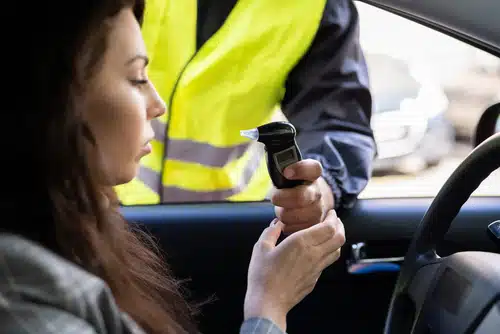
When the police pull someone over on suspicion of drunk driving in South Carolina, they will usually ask for a breath sample. Most people will consent to a breath test—either because they know they are required to do so under South Carolina’s “implied consent” law or because they are too scared to say “No.”

But, what if you refuse?

If you refuse a breath test, can prosecutors still prove you were driving drunk? Or, do they need a blood alcohol concentration (BAC) reading to convict you? Unfortunately, not only can you still face a DUI conviction, but you can face an additional conviction for your “implied consent” violation.

How Prosecutors Can Prove Drunk Driving Without a BAC Reading

In some states, the police can force you to provide a blood sample if you refuse to take a breath test on the side of the road. But, this isn’t the case in South Carolina. Just as the police cannot force you to blow into the breathalyzer device, they cannot force you to undergo a blood draw.

Even so, prosecutors don’t need a breath sample or a blood sample to prove that you were drunk behind the wheel. This is due to the specific language of South Carolina’s drunk driving statute.

South Carolina’s drunk driving statute establishes two separate offenses. One of these offenses, driving with an unlawful alcohol concentration (DUAC), requires proof of your BAC. This section of South Carolina’s DUI law states:

“It is unlawful for a person to drive a motor vehicle within this State while his alcohol concentration is eight one-hundredths of one percent or more.”

Under the DUAC law, if your BAC is 0.08% or above, this is all it takes for prosecutors to secure a conviction. If the police obtain a valid BAC reading without violating your constitutional rights, avoiding a DUAC conviction can be very challenging—and negotiating a plea bargain may be your best option.

The other offense established under South Carolina’s drunk driving statute does not require proof of your BAC.

Instead, the offense of operating a motor vehicle while under the influence (commonly referred to as DUI) focuses on your behavior behind the wheel. This section of South Carolina’s drunk driving statute states:

“It is unlawful for a person to drive a motor vehicle within this State while under the influence of alcohol to the extent that the person’s faculties to drive a motor vehicle are materially and appreciably impaired . . . .”

As you can see, nothing here requires evidence that your BAC was 0.08% or above. If prosecutors can prove that your ability to drive was “materially and appreciably impaired” due to your consumption of alcohol, this alone is enough to prove a DUI.

As a result, while refusing a breath test might prevent the State of South Carolina from prosecuting you for DUAC, it won’t protect you against prosecution for DUI. Since the penalties for DUAC and DUI are the same, this means that you can face the same consequences regardless of whether you consent to a breath test on the side of the road.

With that said, there are some additional factors to consider. These include:

1. If You Refuse a Breath Test, You Can Be Charged with an Implied Consent Violation

Under South Carolina’s “implied consent” law, you are required to take a breath test when the police pull you over for drunk driving. While the police need to meet certain requirements before the law applies, they are trained to meet these requirements—and they will do so in most (but not all) cases.

If the “implied consent” law applies and you refuse a breath test, you can be charged with an “implied consent” violation. You can be convicted of an “implied consent” violation regardless of whether you were driving drunk—and, if you are convicted, you can face a minimum six-month driver’s license suspension unless you enroll in South Carolina’s Ignition Interlock Device Program.

2. If You Refuse a Breath Test, Prosecutors May Not Have the Evidence They Need to Prove DUI

While prosecutors can pursue a DUI charge without evidence of your BAC, in order to do so, they need evidence that your driving faculties were “materially and appreciably impaired.” While this evidence can take many forms—from dash camera footage of your vehicle on the road to the arresting officer’s testimony regarding your slurred speech and bloodshot eyes, there are several potential ways to defend against a DUI charge in South Carolina state court.

However, refusing a breath test has another important consequence: Under South Carolina’s “implied consent” law, prosecutors can use your refusal against you in court. In other words, they can present your refusal as evidence that you knew you were drunk behind the wheel.

3. In All Cases, Determining What Defenses You Have Available Requires Experienced Legal Representation

As you can see, there are several important (and complicated) issues involved in defending against a drunk driving charge in South Carolina. If you refused a breath test during your DUI stop, you should speak with a lawyer promptly.

An experienced South Carolina DUI lawyer will be able to examine the facts of your case to determine if the arresting officer took the steps necessary to trigger South Carolina’s “implied consent” law. If not, your lawyer can use this in your defense. If so, your lawyer can determine what other options you have available. Even if you cannot avoid penalties entirely, your lawyer can still help ensure that the consequences of your drunk driving arrest are no greater than necessary.

Speak with a South Carolina DUI Lawyer in Rock Hill for Free

If you need to know more about your options after refusing a breath test during a DUI stop in South Carolina, we encourage you to get in touch. To schedule a free and confidential consultation with an experienced South Carolina DUI lawyer in Rock Hill, call 803-328-8822 or request an appointment online today.

How Can Dash Camera Footage Help (or Hurt) Your Defense in a South Carolina DUI Case?

How Can Dash Camera Footage Help (or Hurt) Your Defense in a South Carolina DUI Case?

The police are required to videotape all DUI arrests under South Carolina law. All police vehicles in the state are equipped (or should be equipped) with video cameras; and, when the police initiate a traffic stop based on reasonable suspicion of driving under the influence (DUI), they must start recording as soon as they turn on their lights.

If you have been arrested for DUI, it is important to understand how the dash camera footage of your arrest may be able to help with your defense. It is also important to understand how (and when) prosecutors can use this dash camera footage against you. As with all other aspects of a DUI case in South Carolina, strict rules apply, and you need to work with an experienced defense lawyer who can use these rules to your advantage.

How Dash Camera Footage Can Help Your DUI Defense

Let’s start with how dash camera footage can help your DUI case in South Carolina. Let’s say you were driving home after a night out, and you saw blue lights in your rearview mirror. The police officer started recording when he or she turned on the lights (as required by South Carolina law), and the officer’s dash camera recorded your entire DUI arrest.

In this scenario, there are a variety of ways your defense lawyer might be able to use the officer’s dash camera footage to your advantage. For example:

  • The dash camera footage does not suggest you were driving under the influence. If the officer’s dash camera footage does not show you driving erratically, drifting out of your lane, or running a red light or stop sign, your lawyer may be able to challenge your arrest based on a lack of reasonable suspicion.
  • The dash camera footage shows that the officer failed to properly administer the breathalyzer. When administering the breathalyzer, police officers in South Carolina must follow a specific set of rules and procedures. If the dash cam footage shows that the officer administered your breath test improperly, your BAC reading may be inadmissible in court.
  • The dash camera footage shows that the officer failed to properly administer the field sobriety tests (FSTs). Specific requirements also apply to the administration of the field sobriety tests (FSTs). If the footage shows that the officer failed to properly explain the tests or had you perform the tests on unlevel ground (among other issues), these test results may be inadmissible as well.
  • The dash camera footage shows that the officer failed to read your Miranda rights. The police must read your Miranda rights before interrogating you in custody. If there is no evidence that the arresting officer read your rights, then you may also have grounds to keep any statements you made after being taken into custody out of court.  
  • The dash camera footage shows that you passed the FSTs. In addition to showing police mistakes or misconduct, the dash camera footage of your DUI arrest could also show that there is no evidence of impairment. For example, even if the arresting officer reported that you failed the FSTs, the footage may show that you were fully able to maintain control of your faculties.

Again, these are just examples. When you hire a defense lawyer to represent you, your lawyer can obtain the dash camera footage from your DUI arrest and review it to determine all of the ways it can potentially help (or hurt) your defense. Based on what the footage shows, your lawyer can then help you make informed decisions about how to handle your case—whether you need to consider a plea bargain or diversionary program, or you have grounds to fight your DUI charge in court.

How Dash Camera Footage Can Hurt Your DUI Defense

While there are a variety of ways an experienced defense lawyer may be able to use the dash camera footage of your DUI arrest to your advantage, these defenses won’t always be possible. In some cases, the arresting officer’s dash camera footage will work to the prosecution’s advantage instead. For example, dash camera footage of your DUI arrest could hurt your defense if:

  • The dash camera footage of your traffic stop shows that you were driving dangerously in a manner consistent with alcohol impairment.
  • The dash camera footage shows that the arresting officer followed the protocols for properly administering the breathalyzer.
  • The dash camera footage shows that the arresting officer followed the protocols for properly administering the FSTs.
  • The dash camera footage shows the officer reading your Miranda rights before you admitted to drinking and driving.
  • The dash camera footage confirms the arresting officer’s interpretation of your performance on the FSTs.

Here, too, these are just examples. Experienced prosecutors will thoroughly review the footage of your arrest and determine all of the ways they can use this footage against you. If the footage shows that you were driving under the influence, this could present challenges for your defense, and you will need to rely on your lawyer to determine what other defense options you have available.

What if Your DUI Stop Wasn’t Recorded?

Even though the police are required to record all DUI stops, some DUI stops don’t get recorded. So, what happens if your DUI arrest wasn’t caught on video?

If the officer who arrested you failed to record your DUI stop, this could potentially be enough to get your DUI charge dismissed. However, the officer may also be able to submit an affidavit stating that the camera was inoperable. If this happens, and if prosecutors can show that the failure to record your arrest was justified, they may still be able to use other forms of evidence to secure a conviction.

Discuss Your Case with a Rock Hill DUI Defense Lawyer

Are you facing a DUI charge in Rock Hill, SC? If so, you can contact us for a free, no-obligation consultation. To discuss your case with an experienced DUI defense lawyer in confidence, call 803-328-8822 or tell us how we can reach you online now. 

What is the Best Defense to a DUI in South Carolina?

What is the Best Defense to a DUI in South Carolina?

If you are facing a DUI charge in South Carolina, you need to make smart decisions about your defense strategy. While there are a variety of potential defenses to a DUI charge, not all defenses are available in all cases. Additionally, even if you have multiple defenses available, it could make sense to focus on a single defense that will resonate with the prosecutor, judge, or jury.

This raises a key question: What is the best defense to a DUI in South Carolina? If you are going to focus on one strategy to prevent the government from meeting its burden of proof, which strategy should you use?

The Best Defense to a DUI Depends on the Circumstances At Hand

While it would be nice if there was one defense that worked in all DUI cases, this simply isn’t realistic. In DUI cases, the facts matter, and the defenses you have available will depend heavily on the facts of your case. As a result, there is not one single DUI defense that is “the best” in all scenarios.

Instead, there are several relevant considerations.

For example, one key factor to keep in mind is that the government has two ways to prove a DUI charge in South Carolina. Under South Carolina’s DUI laws, prosecutors can secure a conviction by proving that either: (i) your blood alcohol concentration (BAC) was above the legal limit; or, (ii) your “faculties to drive a motor vehicle [were] materially and appreciably impaired.” They do not need to prove both.

This means that even if you are able to successfully challenge your BAC reading (assuming you took the breath test), you could still be convicted based on other evidence of impairment. Likewise, even if there is no evidence that your faculties were impaired, if your BAC was 0.08 percent or above (if you’re 21 or older), this is enough for prosecutors to seek—and win—a guilty verdict in court.

The Best Defenses Are Those that Protect You Completely

With this in mind, one way to approach the question of, “Which DUI defense is best?” is to focus on defenses that protect you completely. These are defenses that protect you regardless of your BAC and regardless of whether the government has any other evidence of impairment. Some examples of these types of defenses include:

1. The Police Stopped You Illegally

To conduct a legal traffic stop, the police must have “reasonable suspicion” that you are guilty of a crime or traffic violation. This protection exists under the Fourth Amendment to the U.S. Constitution, which prohibits unreasonable searches and seizures. The “reasonable suspicion” requirement prohibits the police from stopping you without cause—and it also prohibits the police from stopping you based on your color, race, sex, or any other personal trait.

If the police stop you without reasonable suspicion, then all of the evidence obtained following your traffic stop was obtained unconstitutionally. This means that you have the right to have this evidence excluded (or “suppressed”) from your DUI case. If prosecutors do not have any evidence that they can use, then they cannot prove that you are guilty of DUI.

2. You Were Denied Your Right to an Attorney

You may also be able to suppress the government’s evidence against you if the police denied your right to an attorney. If you requested to speak with an attorney during your DUI stop, the police may have been required to grant your request. If the police were required to grant your request and failed to do so, this could render all of the evidence obtained after your request inadmissible in court.

3. You Weren’t Driving

A third, and very different, type of defense that can protect you regardless of your BAC and your level of impairment is the defense that you weren’t driving. South Carolina’s DUI law specifically states that it is illegal “to drive a motor vehicle” while intoxicated or impaired. So, if you weren’t driving, then it doesn’t matter how much you had to drink.

In some states, you can be convicted of DUI if you are in the driver’s seat with the key. Some states even allow for conviction if you are passed out in the driver’s seat while parked. But, in South Carolina, this is not the case. South Carolina’s DUI law specifically requires you to be “driving,” and the courts have interpreted this as meaning that your vehicle must be in motion.

How Not to Defend Against a DUI Charge in South Carolina

While these defenses can help you avoid a DUI conviction completely, there are also “defenses” that completely do not work. When facing a DUI charge, you need to be careful to avoid relying on these “defenses” that don’t actually protect you.

You also need to avoid the mistake of only defending against half of the government’s case. As we discussed above, prosecutors in South Carolina can secure a DUI conviction based on a high BAC or evidence of impairment. If you defend against one of these but not the other, you can still get convicted of DUI.

Your Next Steps When Facing a DUI in South Carolina

Given everything we’ve discussed, what are your next steps if you are facing a DUI charge in South Carolina? At this point, the best thing you can do is discuss your case with an experienced defense lawyer. You need to know what defenses you have available, and you need to make an informed decision about which defense (or defenses) you assert. Making this decision requires insights that only come with years of experience handling plea negotiations and fighting DUI charges in court.

Discuss Your DUI Case with Attorney Michael L. Brown, Jr.

Attorney Michael L. Brown, Jr. has years of experience defending clients against DUI charges in Rock Hill, SC. If you are facing a DUI charge, he can help protect you. To discuss your case with Mr. Brown in a free and confidential consultation, call 803-328-8822 or tell us how we can reach you online now.

How To Handle a South Carolina DUI Case When You Were Driving Drunk

How To Handle a South Carolina DUI Case When You Were Driving Drunk

Sometimes, the police stop people who are complying with the law. Other times, they stop people who are driving drunk. If you got caught driving under the influence in South Carolina, how should you handle your DUI case? Here’s what you need to know:

Just Because You Were Driving Drunk, This Doesn’t Mean the Prosecutor Can Prove It

The first thing you need to know is that just because you were driving drunk, this doesn’t necessarily mean that you will be found guilty in court. In South Carolina, the prosecutor has the burden of proving your guilt beyond a reasonable doubt. If the evidence isn’t there, or if the jury decides that the prosecutor hasn’t done his or her job effectively, you may be able to secure a “Not guilty” verdict despite the facts at hand.

Now, does this mean you should expect to receive a “Not guilty” verdict? Absolutely not. While this may be a realistic possibility, its likelihood depends entirely on the unique circumstances of your case. Determining your chances of walking away from a DUI trial without a conviction will require a thorough assessment of factors such as:

  • What evidence did the police collect during your arrest?
  • What was your blood alcohol concentration (BAC)?
  • Is your BAC reading reliable?
  • Were you driving dangerously?
  • Is any of the prosecution’s evidence inadmissible due to a violation of your constitutional rights?

These are just examples. To make informed decisions, you need to have a full understanding of how the law applies to your situation, and this means that you should discuss your DUI case with a defense lawyer as soon as possible.

If the Prosecutor Can Prove It, You Will Need to Weigh Your Options

Let’s say you meet with a defense lawyer; and, after reviewing your case, your lawyer determines that the prosecutor’s office has the evidence it needs to convict you. If you got caught driving drunk in South Carolina and the prosecutor can prove it, you will need to weigh the options you have available.

What are your options when there is a good chance you will get convicted if you take your DUI case to trial? Depending on the circumstances of your case, your options may include:

What about pleading guilty? Rarely (if ever) is simply pleading guilty your best option. There are several reasons why—which you can read about in our previous article, Should I Plead Guilty to DUI if I was Driving Drunk in South Carolina?

Ignoring Your South Carolina DUI Charge is a Mistake

If you know you are guilty, should you simply accept your fate and move on? This, too, can be an extremely costly mistake. If you ignore your DUI, the judge will almost certainly find you guilty in your absence, and the judge will impose a sentence in line with the maximum penalties permitted under South Carolina law. This means that ignoring your DUI could lead to:

  • Fines, assessments, and costs
  • Loss of your driver’s license
  • Jail time or community service

As noted above, even if you got caught driving drunk, you could have multiple options that will provide a far better outcome than letting the judge find you guilty. If your defense lawyer is able to negotiate a plea deal for a reduced charge, the financial costs of your arrest will go down significantly. If you qualify for one of South Carolina’s pre-trial diversion programs, you may be able to avoid the consequences of a conviction entirely. If the police violated your constitutional rights—or if the prosecutor violates your constitutional rights at any stage during your DUI case—this could entitle you to a dismissal as well.

You Can (and Should) Hire a Defense Lawyer to Protect You

Given that you have options available—and given that you need to make an informed decision about which of these options to pursue—it is important that you hire a defense lawyer to help you. Your lawyer can help you decide how best to approach your case, and then your lawyer can take all necessary legal steps on your behalf. If you qualify for a pre-trial diversion program, your lawyer can help you enroll, and then your lawyer can help ensure that your record is wiped clean once you complete the program successfully.

While you will need to pay for your legal representation, your legal fees will likely be far surpassed by the costs your lawyer helps you avoid. Hiring an experienced DUI defense lawyer is an investment in your future—and it is an investment that is well worth it.

You Should Not Underestimate the Consequences of a DUI Conviction

Finally, as you weigh your options, it is important to make sure you are not underestimating the consequences of a DUI conviction. Between fines, assessments, court costs, and increased insurance premiums, a DUI conviction can easily cost you thousands of dollars. If you lose your job (or become disqualified from desirable job opportunities), it could cost you far more.

A DUI conviction can have a variety of other consequences as well. For example, if you are a licensed professional or a member of the military, it could negatively impact—if not jeopardize—your career. You could also lose access to various other benefits and opportunities; and, if you get another DUI in the future, you will be facing mandatory jail time along with other enhanced penalties.

Discuss Your Case with a Rock Hill, SC DUI Defense Lawyer for Free

If you are facing a DUI charge after driving drunk in South Carolina, we strongly encourage you to contact us for more information. You should not make any decisions about your case until you speak with a defense lawyer. To schedule an appointment with an experienced Rock Hill, SC DUI defense lawyer as soon as possible, call 803-328-8822 or tell us how we can reach you online now. 

SC DUI Enforcement Increases During the Holiday Season

SC DUI Enforcement Increases During the Holiday Season

In South Carolina, local and state police increase their efforts to stop drunk drivers during the holiday season. As The Herald wrote around this time last year:

“As people gather for the Christmas and New Year holidays, law enforcement officials in South Carolina are planning extra efforts to combat drunk driving and DUI. Th[e] S.C. Highway Patrol and other state agencies are in the midst of a ‘Sober or Slammer’ holiday campaign that runs through the new year.”

With more police on the road monitoring for drunk drivers, those who choose to drink and drive face a much higher risk of getting pulled over. As DUIs carry steep penalties in South Carolina, this is a risk that many local residents and visitors cannot afford to take.

10 Tips for Avoiding SC DUI Penalties During the 2022 Holiday Season

With this in mind, what can you do to avoid the severe consequences of a DUI conviction during the 2022 holiday season? Here are 10 tips from Rock Hill DUI lawyer Michael L. Brown, Jr.:

1. Don’t Drink and Drive

Of course, the best way to avoid a DUI is to never drink and drive. While this might not stop the police from pulling you over (or questioning you at a checkpoint), if you are not driving drunk, you obviously do not deserve a DUI conviction. Driving under the influence is illegal for a reason, and making sure you only drive when you are sober will help keep you, your loved ones, and other drivers safe on South Carolina’s roads.

2. Know What To Do At a DUI Checkpoint

DUI checkpoints are legal in South Carolina, and they tend to be especially prevalent during the holiday season. If you get stopped at a DUI checkpoint, it is important that you know what to do (and what not to do) while you are there. For example, being confrontational or refusing to provide your driver’s license and registration will almost always lead to problems; and, if you are belligerent, this will justify the police in asking you to step out of your car for the field sobriety tests (FSTs) and breathalyzer.

3. Know What To Do if the Police Ask You To Step Out of Your Car

Similarly, knowing what to do (and what not to do) when the police ask you to step out of your car can greatly improve your chances of avoiding a DUI conviction. For example, while the police cannot force you to take the breathalyzer, refusing the breath test is a violation of South Carolina’s “implied consent” law. Refusals usually lead to arrests, and you can face penalties for your refusal even if you are not convicted of DUI.

On the other hand, taking the field sobriety tests is not required. You can, and generally should, politely decline to take the FSTs. If you consent to the FSTs, there are simply too many things that can go wrong. While it is possible to challenge invalid FST results, it is best to avoid the need to challenge your FST results if possible.

4. Avoid Saying (or Posting) Anything Prosecutors Can Use Against You

When you are facing a possible DUI arrest (or facing a DUI charge), you need to avoid saying anything prosecutors can use against you. You have the right to remain silent, and it is important to use this right to your advantage. It is also important to avoid posting anything related to your DUI on social media. If you publish an incriminating post, prosecutors can—and will—use it against you.

5. Make Sure You Know Your Court Date

When you get a DUI in South Carolina, you will have a court date scheduled soon after your arrest. Failing to appear in court can be costly. So, you need to make sure you know your court date, and you need to be prepared to attend your court date with your lawyer.

6. Do Not Plead Guilty In Court

Regardless of the facts of your case, you do not want to plead guilty in court. If you do, you will waive many of your rights, and you can expect to face a harsh sentence. Even if you clearly got caught driving drunk, you have better options available—and you may even still have options for avoiding a conviction entirely.

7. Take Detailed Notes About Your DUI Arrest

As soon as possible, you should take detailed notes about your arrest. Why did the officer say he or she stopped you? What did the officer tell you about the FSTs and breathalyzer? What did you say on the side of the road? All of these are important details that you will want to discuss with your DUI lawyer.

8. Schedule a Free Consultation with a DUI Lawyer

Due to the significant risks of facing a DUI in South Carolina, it is important to have an experienced lawyer on your side. As soon as possible, you should schedule a free consultation with a lawyer who focuses on handling DUI cases in your local area.

9. Carefully Weigh All of Your Options

While pleading guilty in court is not a good option, you do potentially have several options available. For example, during your free initial consultation, your DUI lawyer will examine options such as negotiating a plea deal or fighting for a pre-trial dismissal.

10. Fight Your DUI in Court if Necessary

Finally, if it is not possible to achieve a favorable outcome before your trial date, your DUI lawyer can fight for a favorable outcome in court. Depending on the evidence that is available, this could mean securing a “Not guilty” verdict, or it could mean securing a reduced sentence that mitigates the consequences of your DUI.

Request a Free Consultation with Rock Hill DUI Lawyer Michael L. Brown, Jr.

If you get a DUI during the holiday season, you need to take your case seriously—and this starts with contacting an experienced DUI lawyer as soon as possible. To request a free consultation with Rock Hill DUI lawyer Michael L. Brown, Jr., call 803-328-8822 or tell us how we can reach you online now. 

How Do You Establish “Reasonable Doubt” in a South Carolina DUI Case?

How Do You Establish “Reasonable Doubt” in a South Carolina DUI Case?

When you are facing a DUI charge in South Carolina, you do not need to prove your innocence to avoid a conviction at trial. Instead, all you need to do is prevent prosecutors from proving that you are guilty. The prosecution has the burden of proving your guilt “beyond a reasonable doubt,” and if it cannot meet this burden you are entitled to walk free.

This is true even if you were driving under the influence when you got arrested.

But, even though the prosecution has the burden of proof, avoiding a DUI conviction is easier said than done. Prosecutors can use various forms of evidence to establish defendants’ guilt, and many prosecutors have spent their entire careers finding ways to win guilty verdicts at trial. If you are facing a DUI charge, there is one fundamental question you need to answer: How can you establish “reasonable doubt” in your South Carolina DUI case?

The Importance of Reasonable Doubt In a South Carolina DUI Case

The answer to this question is important for several reasons. First, it is important for deciding how to approach your DUI case. If you can prevent the prosecution from meeting its burden of proof, you may be able to secure a favorable plea deal—or you may even be able to get your DUI charge dismissed prior to trial. If you don’t think you will be able to establish “reasonable doubt” based on the circumstances at hand, then pursuing one of South Carolina’s diversion programs might be your best option.

If you need to take your DUI case to trial, knowing how to establish reasonable doubt will be fundamental to your defense. Even though the prosecution has the burden of proof, you will still need to present your side of the case to avoid a conviction (if it is possible to do so). Contrary to what you might read elsewhere online, there are no “tricks” to avoiding a DUI conviction, and there is nothing you can say or do that will automatically protect you from a “Guilty” verdict in court.

4 Ways It Might Be Possible to Establish Reasonable Doubt

So, how can you establish reasonable doubt as to whether you were driving under the influence? While every case is different, here are four ways it might be possible to avoid a conviction for your South Carolina DUI charge:

1. Challenging the Reliability of Your Breathalyzer Reading (Your BAC)

One option is to challenge the reliability of your breathalyzer reading. If you took the breath test and your blood alcohol concentration (BAC) was above the legal limit, prosecutors will use this against you—unless you can show that the reading isn’t reliable. While these readings often are reliable, “false positives” are common as well. You don’t necessarily need to be able to prove that your BAC reading is inaccurate. If you can show that your reading could be inaccurate (i.e., because the police department’s calibration records for the breathalyzer device are incomplete), this can be enough to establish reasonable doubt.

But, it is important to keep in mind that prosecutors have two options for establishing guilt in drunk driving cases. To secure a conviction in court, they can prove that either (i) your BAC was over the legal limit, or (ii) your driving abilities were impaired. They do not need to prove both. So, while challenging the reliability of your breathalyzer reading might help with creating reasonable doubt, this won’t necessarily be sufficient on its own.

2. Challenging the Reliability of Your Field Sobriety Test Results

Similar considerations apply to your field sobriety test results. Unlike the breathalyzer, the field sobriety tests are not mandatory in South Carolina. But, if you consent to the field sobriety tests, then prosecutors can use your results against you.

Here, too, the focus is on identifying any way to call the reliability of your test results into question. Did your arresting officer follow all of the requisite procedures? Did he or she explain the tests to you properly? Did the officer properly interpret your performance on the field sobriety tests? These are just a few examples of several ways you may be able to challenge your field sobriety test results during your DUI case.

3. Keeping the Prosecution’s Evidence Out of Court

Another key defense strategy in many DUI cases involves fighting to keep the prosecution’s evidence out of court. Prosecutors need evidence to secure a conviction; and, the less evidence they have, the more difficult it is to prove your guilt beyond a reasonable doubt.

In many cases, keeping evidence out of court involves proving a violation of your constitutional rights. These rights apply while you are driving, while you are on the side of the road, and while you are awaiting trial. If the police stopped you without reasonable suspicion (i.e., if they racially profiled you), if they arrested you without probable cause, or if prosecutors have withheld exculpatory evidence, these could all justify a motion to exclude evidence from your trial.

4. Suggesting an Alternate Explanation for Your Driving

Establishing reasonable doubt in your South Carolina DUI case could also involve suggesting an alternate explanation for your driving. Just because you were swerving or speeding, this does not necessarily mean that you were drunk behind the wheel. There could be other explanations for your driving, and these alternate explanations could be enough to raise a reasonable doubt as to whether your driving abilities were alcohol-impaired. But, as discussed above, if your BAC was above the legal limit, this is a separate issue you will need to contend with as well.

Discuss Your Defense Strategy with an Experienced Rock Hill DUI Lawyer

Defending against a DUI charge in South Carolina is not easy, and there are several factors you will need to consider when deciding how best to approach your case. To discuss your defense strategy with an experienced Rock Hill DUI lawyer, call 803-328-8822 or request a free initial consultation online today.